New evidence is providing a clearer picture of the risks of deep-sea mining — not just to ecosystems in the areas where mining takes place, but to large swaths of the deep sea’s biological communities.

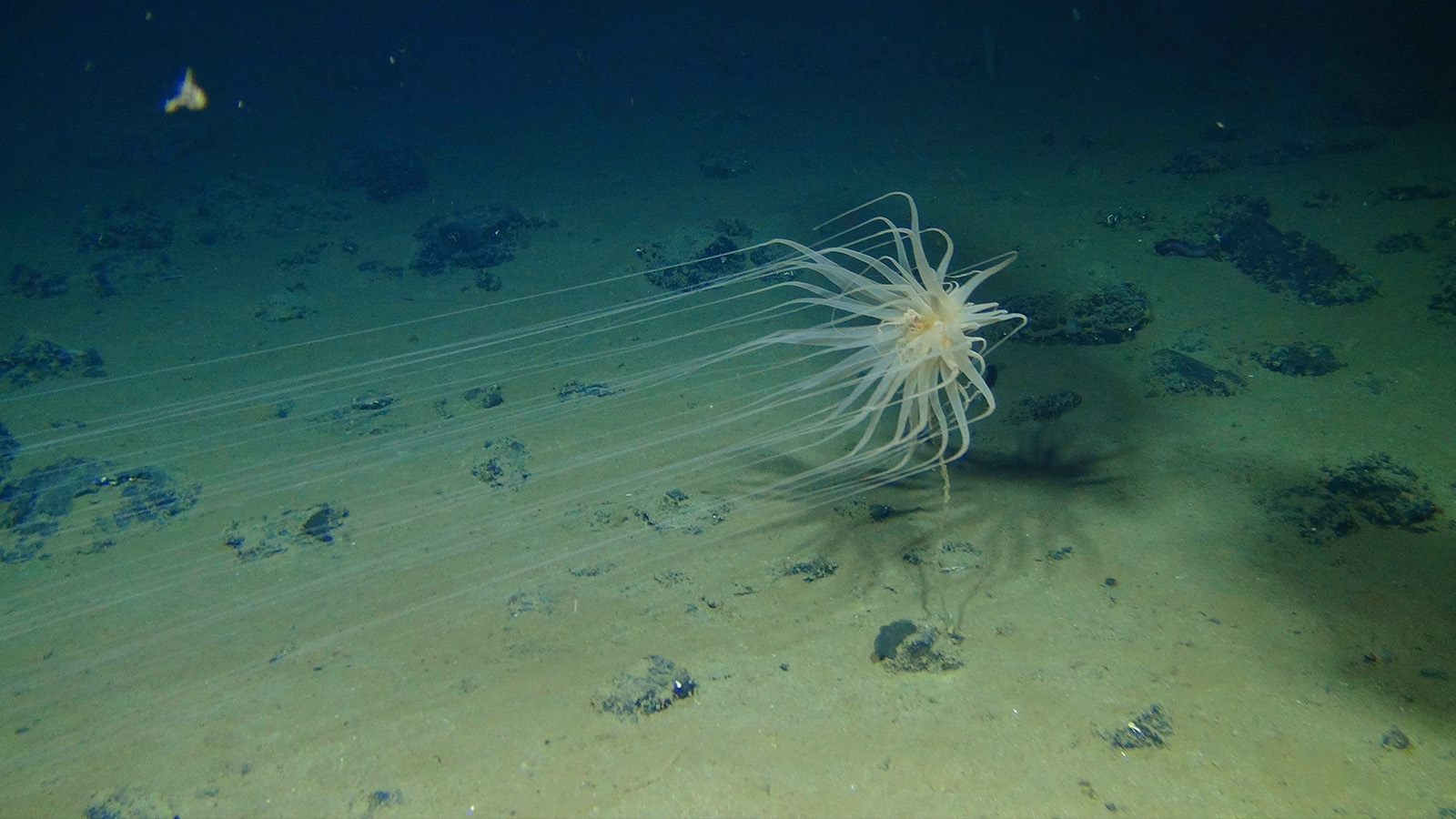
The marine world is complex, vulnerable, and still largely uncharted. As scientific understanding of deep ocean environments increases, so too does our understanding of the vibrancy and diversity of life it contains. At the same time, mounting pressure to meet resource demand with undersea mineral extraction threatens these delicate ecosystems.
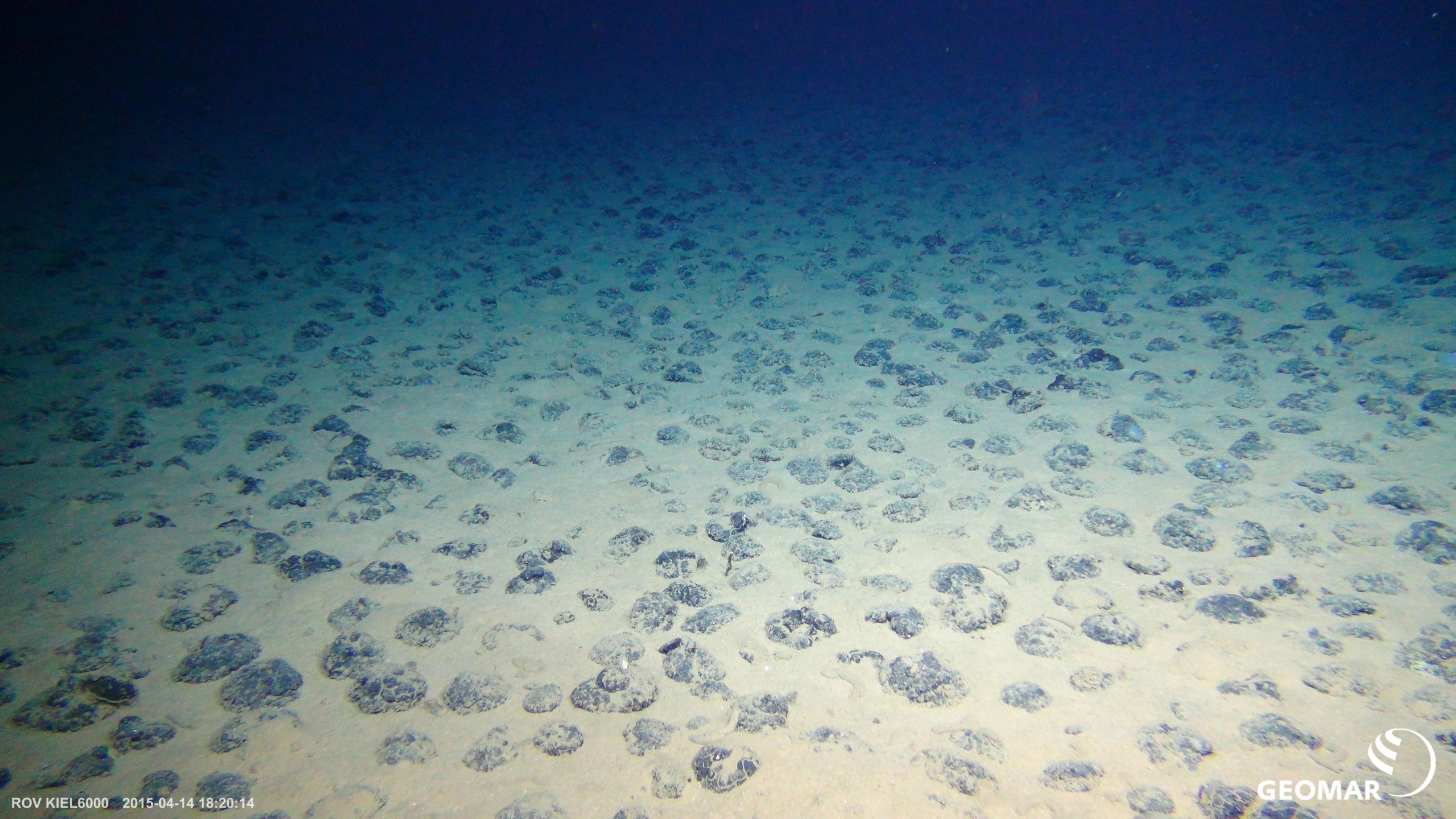
Governments and mining companies across the world are pushing to extract mineral-rich deposits of cobalt, manganese and other minerals from the ocean floor. These minerals can be collected as potato-sized metallic nodules or from massive sulfide deposits – accumulations of sulfide minerals that form on the seafloor due to hydrothermal activity in volcanic environments.
In 2024, Frontier Group reported on the long-lasting damage to ocean ecosystems that could be caused by deep-sea mining, and highlighted solutions that could reduce our demand for newly-mined critical minerals. Since then, however, industry interest in deep-sea mining has gathered pace. Numerous countries now have active mining exploration programs, and the U.S. has recently taken steps to expedite the permitting process for exploration and extraction licenses. At the same time, new evidence is providing a clearer picture of the environmental risks of deep-sea mining – not just to the local ecosystems in the areas where mining takes place, but to large swaths of the deep sea’s biological communities.
Relatively little is known about the deep-ocean floor – much less the impacts of mining it – but a growing body of evidence is telling us that the damage caused by deep-sea mining could be significant and long-lasting.
A 2025 analysis of an early deep-sea mining trial conducted in 1979, for example, reveals lasting track marks on the ocean floor, deep enough to trap plastic waste. Substantial deep-sea sedimentation (the collection of particles on the ocean floor) takes millions of years, meaning that any marks made by the massive plows involved in deep-sea mining may stick around for just as long.
Research has shown that the wildlife impacted by mining operations may take decades to recover – and in some cases may not recover at all. According to one study, slow-moving and stationary species are especially impacted, taking significantly longer to repopulate recently mined areas. While some species managed to make a partial population recovery after mining in the area, many others are still gravely underrepresented compared to undisturbed surrounding areas, even after decades of inactivity in the area. Scientists warn that large-scale, long-term deep-sea mining would multiply the damage.
This risk is not limited to the mining areas themselves. The machines used for deep-sea mining spit out massive sediment plumes – containing toxic substances such as copper and nickel as well as sediment – which can travel thousands of kilometers across the ocean.
A study by University of Hawaii biologists published in November 2025 suggests that these plumes may have broad ecosystem impacts. For example, when sediment is consumed by – and kills – zooplankton, the basis of ocean food chains, this has a ripple effect throughout the food web, from plankton to krill all the way up to fish populations like mahi mahi and tuna, species vital to ocean food webs.
Food chain disruption is not the only potential impact. The light pollution created by mining vessels and ships may be highly disruptive to deep-sea species accustomed to a dark environment. In the case of massive sulfide mining, which takes place near hydrothermal vents, species blinded by mining-related light pollution may also be less able to avoid high-heat vents, which can be deadly.
The noise pollution created by mining operations also travels for miles in underwater environments and may impact the feeding and reproduction of fish and other marine species. A 2025 study suggests that noise from mining operations could even cause permanent hearing damage in some species.
Given what we know about deep-sea mining and its likely impacts – and, more importantly, given how much we know we don’t know – there is an urgent need for a moratorium on deep-sea mining licenses and a shift in focus toward ways of meeting critical mineral demand that spare some of the last remaining unspoiled ecosystems on Earth.
Analysts ranging from the International Energy Agency to the Energy Transitions Commission argue that adopting “circular economy” strategies can significantly reduce demand for critical minerals over the next decade. As we argued in our 2024 report, rebuilding the materials economy around the ‘5Rs’ (reduce, reuse, recycle, reimagine, repair) can reduce the need for sustained mining that damages our environment.
Deep-sea mining poses serious risks to our oceans. But there are alternatives: Decision-makers must prioritize resource preservation and reuse of critical minerals, which can reduce pressure for all kinds of mining, including deep-sea mineral extraction. A moratorium on deep-sea mining and a policy of resource conservation aren’t just stewardship of our world, they’re common sense for our future.
Intern